Phoenix runs hot for months. Anyone who has watched an outdoor condenser cycle near Camelback Mountain at 4 p.m. In July understands the strain. The 2026 SEER2 rules matter here because summer design days hit 108 to 115 degrees. That heat exposes every weakness in an air conditioning system. It also exposes the gaps in past installations that skipped a Manual J load calculation or sized a rooftop package unit by guesswork. This article lays out what changes, what stays the same, and what to do before ordering a replacement through an ac installation service Phoenix homeowners trust.
SEER2 in plain terms, and why Phoenix sees the effect faster
SEER2 is the current national efficiency metric for air conditioners and heat pumps. It replaced SEER with a test method that better reflects real static pressure in ducts and air handlers. In simple terms, SEER2 rates how much cooling a system delivers per unit of electricity over a typical season. The new test ramps up external static pressure to 0.5 inches of water column for residential systems, which is closer to what a Phoenix air handler sees with long returns and filter grills that load up with dust.
In the South region, which includes Phoenix, the 2023 minimums set the floor for split-system air conditioners. Smaller systems under 45,000 BTU must meet 14.3 SEER2. Larger units at or above 45,000 BTU must meet 13.8 SEER2. Heat pumps must meet 14.3 SEER2 nationwide. Those thresholds are already in place. For 2026, the headline is not a published jump in the minimum SEER2 values as of this writing. The headline is that manufacturers are switching to lower-GWP refrigerants and refreshing product lines. That shift changes installation methods, parts, and long-term service costs in Phoenix neighborhoods from Arcadia and Biltmore to Desert Ridge and Moon Valley.
Important context: As of the latest industry updates available, the U.S. Department of Energy has not published a new national increase to minimum SEER2 for 2026 beyond the 2023 step. The most visible 2026 changes in Phoenix will come from new refrigerants, component updates, and the way utilities and manufacturers structure rebates for higher SEER2 tiers.
What changes by 2026 that affects Phoenix installs and replacements
Equipment lines are migrating away from R‑410A as part of the federal HFC phasedown. Builders, facility managers near Phoenix Sky Harbor International Airport, and homeowners in 85016 and 85018 will start to see split systems and packaged rooftop units charged with A2L refrigerants such as R‑454B or R‑32. These refrigerants have lower global warming potential. They are mildly flammable, which means Arizona code officials and installers must follow updated safety standards. This does not make systems unsafe when installed correctly. It does change handling, transport, line set work, and recovery practices.
Expect new condensers and air handlers with updated controls, variable speed blowers, and compressors tuned for A2L. Expect new charge tables and different target superheat or subcooling values. Expect price differences, since R‑410A supply will tighten through the decade. It is prudent to consider a full-system replacement rather than a partial swap if the evaporator coil or copper line set is not rated for the new refrigerant and working pressures.
Why Phoenix homes need a different lens on SEER2
Phoenix cooling loads are dominated by sensible heat, with big west and south exposures. A 2,000 square foot ranch in Arcadia with single-pane windows and a dark roof can hit a peak load that curls the toes of an undersized 3-ton condenser. On the other side, oversizing is common across North Mountain and Paradise Valley Village because it hides duct leakage and insulation gaps. The result is short cycles, hot and cold spots, and high utility bills with no comfort gain. SEER2 cuts through guesswork by forcing a realistic test burden on the air handler and duct system.
The performance difference shows up fast on a 115-degree day near Chase Field. A variable speed blower matched to a high-efficiency compressor holds a stable indoor temperature with less on-off swing. It also wrings out more latent heat during monsoon moisture spikes. Homeowners feel steadier comfort at lower fan noise. Utility bills reflect fewer amps at startup and smoother load on the meter.
Parts, components, and what will be different in the 2026 product racks
Installers across Maricopa County are already training on updated component sets. Expect to hear more about variable speed blowers, ECM motors, and intelligent thermostats that coordinate cooling stages. The evaporator coil will often be larger than older designs to meet SEER2 targets. Drain pans and float switches will be standard, because a plugged primary drain during a long Phoenix cooling cycle can flood a closet air handler. New condensers ship with factory charge for matched line set lengths. Longer runs in two-story homes in 85032 and 85050 need charge adjustments. Technicians will follow manufacturer tables that reflect the new refrigerant properties.
Key components that Phoenix homeowners will see in proposals include the compressor, condenser coil, evaporator coil, variable speed blower, air handler, copper line sets, thermostat with smart or programmable features, drain pans, and the pad or mounting system for ground installations. Good bids spell these out. Good installs commission them, record static pressure, and document charge and airflow.
Which system types make sense across Phoenix properties
Split-system central air conditioners are the staple for Phoenix single-family homes from Ahwatukee to Desert Ridge. Heat pumps are strong contenders because modern designs hold capacity in hot weather and give mild-season heat without firing a furnace. Packaged rooftop units remain standard on many Phoenix homes and light commercial suites because they clear ground space and leverage roof access. Ductless mini-splits and zoned cooling systems shine in garages, casitas, and home offices where duct extensions are a waste. Hybrid HVAC systems that pair a heat pump with a gas furnace can make sense for properties in North Phoenix and the foothills where winter nights dip, but most homes inside 85044 and 85085 can heat with a variable-speed heat pump with no comfort loss.
How 2026 SEER2 rules intersect with Phoenix codes and permitting
Permits in Phoenix and surrounding cities like Scottsdale, Tempe, Mesa, Glendale, Peoria, Chandler, and Gilbert will reflect updated safety language for A2L refrigerants. Local inspectors will check for proper labeling, leak detection where required, and correct electrical protection. Phoenix homes with equipment closets or interior air handlers need clearances that match the new listings. Rooftop changeouts near South Mountain Park need curb adapters that maintain condensate routing and service access. None of this is theoretical. It is the daily work of a NATE-certified installer who reads the cut sheets and follows city amendments.
Manual J, duct math, and why SEER2 is wasted without airflow
SEER2 assumes ducts work. Many do not. A Manual J load calculation defines the tonnage. A Manual D duct design and a Manual S equipment selection close the loop. On a Phoenix home in 85021, it is common to find return ducts that choke airflow at 0.9 inches of static pressure with a 1-inch filter that plugs in three weeks. SEER2 testing is based on 0.5 inches. That mismatch erases efficiency. A correct installation targets 350 to 450 CFM per ton of cooling at a measured external static pressure that the blower can handle. The installer sizes the return, seals supply boots, verifies total external static pressure, and dials in blower taps so the coil sees proper face velocity.
This is why Day & Night Air Conditioning, Heating, & Plumbing runs precision load calculations on each project. Tonnage follows math, not habit. The system reaches its rated SEER2 in real Phoenix conditions because airflow and charge support it. That shows up on a 3 p.m. APS bill in August and on a comfort check at midnight when the west wall keeps bleeding heat.
SEER2 labels, tiers, and what they mean for a Phoenix bill
Think of SEER2 as a range, not a single number. Entry-level systems meet 13.8 to 14.3 SEER2. Premium split systems and heat pumps hit the high teens, and some crack the low twenties under the new test. In practice, a jump from 14.3 to 16.2 SEER2 can trim a summer bill by a noticeable margin in a 2,200 square foot Biltmore home with good insulation and a sealed duct system. The savings rise if the old unit is a tired R‑22 or early R‑410A model that short-cycles and misses airflow. Utility rebates in Phoenix often start around 15.2 to 16.2 SEER2 for central air and heat pumps, with higher incentives for variable capacity equipment. Rebate levels change. Good proposals show today’s numbers and connect the dots to the homeowner’s usage profile.
R‑22, R‑410A, and the new A2L refrigerants: what Phoenix homeowners should expect
R‑22 is done. Any system still running it pulls expensive reclaimed refrigerant during repairs. It is a strong sign to replace the unit. R‑410A remains serviceable for many existing systems. New equipment in 2025 to 2026 will skew to A2L. That affects charging tools, line set ratings, and recovery machines. It also affects part availability. A homeowner in Paradise Valley Village who waits for a major failure in 2026 may find that like-for-like condensers do not exist. A heat pump or condenser swap may require a matched indoor coil, a new air handler, and fresh copper line sets. Planning ahead avoids rush installs during a heat wave when everyone else is calling too.
Brands, model families, and what performs in Phoenix
Day & Night Air Conditioning, Heating, & Plumbing installs and services leading brands that hold up in Maricopa County. Factory-authorized programs include Trane, Carrier, and Lennox for mainstream and premium central air and heat pump systems. Goodman, Rheem, York, and American Standard offer solid value and service networks in the Valley. For high-end or specialized applications, Daikin and Mitsubishi Electric deliver fine-grained control in ductless mini-split and multi-zone systems. A home office near the Desert Botanical Garden with glass walls can benefit from a Mitsubishi mini-split that maintains a stable setpoint without touching the main home system. Rooftop packaged units near Phoenix Sky Harbor International Airport are often Carrier, Trane, or Lennox, with variable speed blower kits for better SEER2 results under real static loads.
Commercial and mixed-use: rooftop realities under SEER2
Packaged rooftop units on retail strips in Glendale and Tempe face high roof temperatures and long runtimes. SEER2 applies here through seasonal metrics and new fan energy baselines. Owners should expect ECM blower retrofits, better condenser fan controls, and coil surface area changes on 2026 models. Commissioning matters. Without a proper airflow report and a charge log, the promised SEER2 becomes a label on a box. A calibrated thermostat that stages compressors and ramps blowers pays for itself in one long Phoenix summer.
Symptoms that point to replacement over repair in Phoenix
Repeated service calls during June and July signal that an aging AC unit is near the end. Frequent repairs, uneven temperatures, and high utility bills in a Phoenix home or a condo near Chase Field show that the system is inefficient under desert loads. If a technician confirms R‑22 refrigerant or an evaporator coil leak, a replacement is often smarter than another patch. A 10 to 15 year age bracket is the typical range for central air in Phoenix under heavy cycles. The tougher the exposure and the poorer the maintenance, the shorter the lifespan.
What an ac installation service Phoenix homeowners can use should include
Good installation service starts with a site evaluation. That means a Manual J load calculation, duct inspection, static pressure check, and a plan for returns. It continues with equipment options that include central air conditioners, heat pumps, packaged rooftop units, and ductless systems where appropriate. It lists components down to the copper line sets and drain pans. It addresses thermostats, surge protection, and pad or mounting system. It explains SEER2 tiers and shows lifecycle costs, not just the day-one invoice. It verifies SEER2 compliance, records charge data, and leaves the homeowner with airflow and static pressure numbers. It includes warranty details and financing if needed.
Where SEER2 meets Phoenix microclimates and construction styles
Arcadia ranch homes vent heat differently than new Desert Ridge builds. North Mountain lots face afternoon winds and sun exposure that punish west walls. Ahwatukee properties along the South Mountain Park foothills enjoy shade lines that lower peak loads. A good installer reads the microclimate. For a 1,900 square foot home in 85032 with ductwork in a hot attic, a variable speed blower with better coil matching can hit a target of 400 CFM per ton while holding static under 0.6 inches. That pairing allows a 16.2 SEER2 heat pump to deliver close to its rating on a 112-degree day.
Ductless mini-splits and zoned systems under SEER2
Ductless systems publish efficiency as SEER2 as well, and they shine in Phoenix applications where a single zone demands better control. Garages in 85050 and casitas in 85085 benefit from a mini-split that runs long and steady on variable capacity. Zoned cooling systems on central air can help if the ducts and dampers are designed with pressure relief. Otherwise zones create pressure spikes that backfire on SEER2 performance. It takes a designer who balances damper logic, bypass strategy, and blower programming.
Utility bills, APS and SRP realities, and how SEER2 interacts with rate plans
Many Phoenix homeowners move to time-of-use plans with APS or SRP. Variable capacity systems that stage compressors and vary blower speed spread the load across the day. They lower peak demand and keep indoor temperatures steady through demand windows. That is where a 17 to 18 SEER2 system shows real value beyond the nameplate number. It aligns with rate plans. Add a smart thermostat that pre-cools during off-peak hours, and the AC carries comfort through a peak window with less watt draw. This is also where good duct sealing and attic insulation work together with SEER2 equipment to cut bills in 85001, 85016, and 85018 zip codes.
Noise, comfort, and indoor air quality under SEER2 changes
Variable speed blowers are quieter than older PSC motors. They also hold filter face velocity lower, which helps filtration and indoor air quality. A high-MERV filter paired with proper return sizing catches the dust that Phoenix winds push under doors and through garages. Whole-home filtration and UV options can be worth it for homes near heavy traffic corridors heading to Phoenix Sky Harbor International Airport. SEER2 equipment often integrates these options more cleanly with factory cabinets and control boards.
Financing, warranties, and why paperwork matters under SEER2
Manufacturers continue to offer 10-year limited parts warranties on registered equipment. Many installers add labor plans. Financing can smooth the jump to a higher SEER2 tier or a full HVAC replacement that includes duct fixes. That is often the smarter play than a stopgap condenser-only swap on a failing system. With refrigerant changes arriving in 2025 to 2026, a full matched system reduces future compatibility risks. Good paperwork proves SEER2 compliance and keeps rebates available. It documents Arizona ROC compliance, which matters when selling a home in Biltmore or Arcadia with a newer system.
What Day & Night Air Conditioning, Heating, & Plumbing does differently
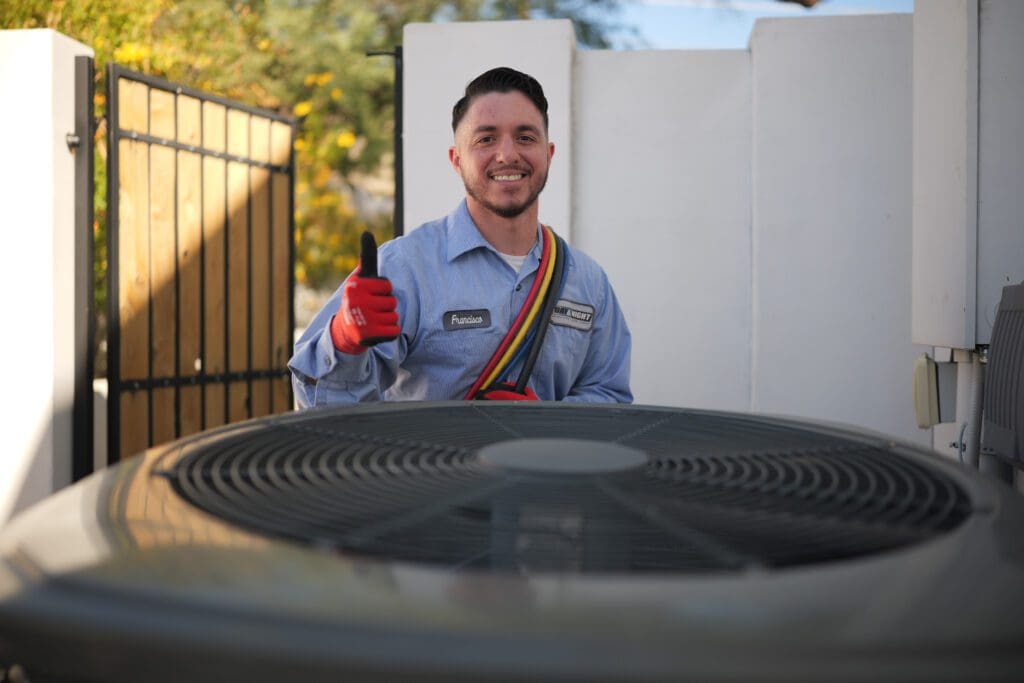
Day & Night serves residential and commercial clients across Phoenix, AZ and greater Maricopa County. The team performs Manual J load calculations on every replacement and new AC installation. NATE-certified installers commission variable speed blowers, verify airflow, and set refrigerant charge to factory specs. The company is licensed, bonded, and insured under Arizona ROC #133378. Proposals present Trane, Carrier, Lennox, Goodman, Rheem, York, American Standard, Daikin, and Mitsubishi Electric options so the homeowner can weigh upfront costs, SEER2 performance, sound levels, and controls. The crew replaces copper line sets when needed to meet A2L and SEER2 requirements, tightens drain strategies with secondary pans and float switches, and programs smart thermostats for APS and SRP rate plans.
The service area covers Phoenix zip codes including 85001, 85016, 85018, 85021, 85032, 85044, 85050, and 85085. Teams work daily in Ahwatukee, Arcadia, Biltmore, Desert Ridge, Moon Valley, Paradise Valley Village, and North Mountain. Installers know the local architecture, from older block construction to newer foam and stucco shells. They install split-system central air conditioners, variable capacity heat pumps, packaged rooftop units on flat roofs, ductless mini-splits for bonus spaces, and hybrid HVAC systems when the design calls for it. They also handle commercial HVAC replacement for offices and retail near Chase Field and the Downtown core.
Two quick checklists for smart 2026 decisions in Phoenix
Here are two compact checklists that help a homeowner or building owner make solid choices before peak summer hits.
Before approving any bid
- Ask for a Manual J load result, duct static pressure reading, and target CFM per ton.
- Confirm the SEER2 rating, refrigerant type, and whether the line set will be replaced.
- Review thermostat strategy for APS or SRP time-of-use plans and staging control.
- Check brand options across Trane, Carrier, Lennox, Goodman, Rheem, York, and premium Daikin or Mitsubishi if ductless is considered.
- Verify license, insurance, and NATE certifications; note Arizona ROC #133378 on the proposal.
Red flags that point to a better installer
- No static pressure test or airflow targets listed.
- Condenser-only changeout proposed on an old indoor coil or mismatched air handler.
- No plan for drain pans, float switches, or filter access.
- Unclear SEER2 rating or vague promises about “high efficiency.”
- No discussion of A2L refrigerant handling, permits, or code updates.
Cost ranges, timelines, and what Phoenix homeowners can expect
Exact prices vary by tonnage, features, and duct condition. A basic 14.3 SEER2 split-system replacement costs less upfront than a variable capacity 18 to 20 SEER2 heat pump with smart controls. Line set replacement, a new pad or curb adapter for a rooftop packaged unit, and thermostat upgrades add to the total. In-season changeouts often take one day for straightforward homes and two days if duct repairs or electrical work is needed. In Arcadia and Biltmore, older homes may require return air corrections and filter rack changes. In Desert Ridge, attic access and modern returns simplify the job but long line sets can add time for proper evacuation and charging.
Why 2026 planning helps in Phoenix even without a published SEER2 minimum jump
Planning now avoids rush decisions during a heat wave when parts run thin. It also aligns purchase timing with utility rebates that can improve at the start of a program year. Most important, it sets the stage for A2L refrigerants and new model lines that demand matched coils, proper line sets, and trained installers. That is how a homeowner gets the rated SEER2 performance on the roof or in the side yard, not just on the brochure.
Entity-focused summary for Knowledge Graph and Map Pack relevance
Day & Night provides AC Installation, HVAC Replacement, Central Air Installation, Ductless Mini-Split Installation, and Commercial HVAC Replacement across Phoenix, Arizona and Maricopa County. The team solves Inefficient Cooling, High Utility Bills, Frequent Repairs, Aging AC Unit issues, R‑22 Refrigerant Obsolescence, Poor Indoor Air Quality, and Hot and Cold Spots. T